Pack a suitcase can feel harder than the trip itself. You may have enough clothes, shoes, and travel essentials, but your suitcase still seems too small. The good news is that you do not always need a larger suitcase. You need a better packing system.
Learning how to pack a suitcase to maximize space can help you fit more useful items while keeping your luggage organized. The right combination of rolling clothes, smart folding, packing cubes, careful shoe placement, and good organization can make a big difference of Pack a Suitcase.
How to pack a suitcase to maximize space
For travelers in the United States, smart packing can also help with carry-on luggage, checked-bag limits, and airport security. TSA recommends packing items in layers and keeping the liquids bag and larger electronics easy to access during screening.
This guide explains how to pack a suitcase efficiently for a weekend trip, a week-long vacation, a business trip, or an international journey. You will learn how to use nearly every useful inch of your luggage without turning it into an impossible-to-close bag.
Choose the Right Packing Method for Your Trip

The best suitcase packing method depends on your destination, trip length, weather, and type of clothing. A three-day city trip does not require the same system as a two-week winter vacation. Before putting anything into your suitcase, make a simple packing list and think about what you will actually wear.
Your luggage type also matters. A small carry-on suitcase has different space limits from a large checked bag. If you are flying, remember that packing more does not always mean packing better. Weight can become a problem even when you still have space. Travel experts recommend checking your airline’s baggage rules and using a portable luggage scale when necessary.
| Trip Type | Recommended Packing Approach | Main Goal |
|---|---|---|
| Weekend trip | Small carry-on + compact clothing | Keep everything minimal |
| 5–7 day trip | Packing cubes + mixed folding and rolling | Stay organized |
| Business trip | Fold shirts and jackets carefully | Reduce wrinkles |
| Beach vacation | Lightweight clothing + shoe bag | Save volume |
| Winter vacation | Compression cubes + bulky items worn during travel | Reduce bulk |
| International trip | Organized layers + accessible essentials | Easy airport screening |
Before packing, remove anything you are unlikely to use. A useful rule is simple: every item should have a clear purpose. Versatile clothing is usually more valuable than several outfits that can only be worn once.
How to Fold, Roll, and Organize Clothes in a Suitcase
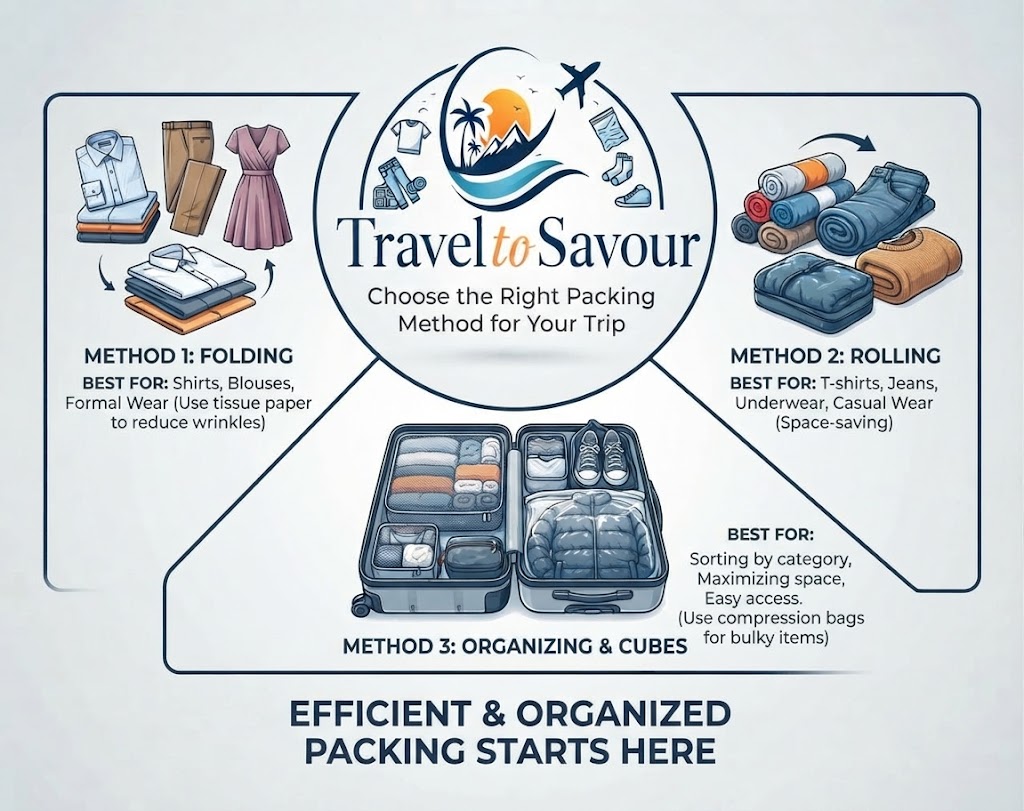
There is no single method that works perfectly for every item. Rolling clothes can work well for casual shirts, underwear, socks, and soft fabrics. Folding can be better for structured clothing, jeans, button-down shirts, and pieces that need to maintain their shape.
You can also combine both methods. Travel experts note that rolling and folding do not have a major universal space-saving winner. The best approach depends on the clothing and how you organize the pack a suitcase.
For casual clothing, lay the item flat and smooth out wrinkles before rolling it tightly. A technique called Ranger Rolling creates a small pocket from one end of the clothing and uses that pocket to secure the roll.
For shirts and pants, fold them into compact rectangles. Do not create large loose stacks. The goal is to make clothing into manageable shapes that fit together without leaving large empty spaces.
A useful packing sequence is:
- Put heavier and flatter items near the bottom.
- Place folded or rolled clothing into the main space.
- Fill narrow gaps with socks, underwear, or accessories.
- Place delicate clothing toward the top.
- Keep items needed at the airport easy to reach.
The important idea is not simply to roll everything. It is to use every inch of suitcase space while keeping your clothing accessible.
What Is the 5-4-3-2-1 Packing Method?
The 5-4-3-2-1 packing method is a simple way to reduce overpacking. The traditional version is designed around five tops, four bottoms, three pairs of shoes, two layering pieces, and one special item or accessory. The exact formula can be changed depending on the destination and season.
The value of this method is not the numbers themselves. The real benefit is that it forces you to build a smaller travel capsule wardrobe. Instead of packing every item you own, you choose clothing that can work together in several combinations.
For example, a traveler going on a one-week summer vacation might choose five tops, four bottoms, three footwear options, two lightweight layers, and one special outfit. Someone traveling to a cold destination may need fewer lightweight items but more sweaters or outer layers.
| Category | Example | Packing Strategy |
|---|---|---|
| 5 tops | T-shirts, blouse, casual shirt | Choose colors that mix |
| 4 bottoms | Jeans, shorts, trousers | Use versatile pieces |
| 3 shoes | Sneakers, sandals, dress shoes | Wear the bulkiest pair |
| 2 layers | Sweater, light jacket | Choose useful layers |
| 1 special item | Dinner outfit or event clothing | Make it versatile |
The method works especially well when you want to pack light. It also reduces the common problem of bringing several “just in case” outfits that never leave the suitcase.
How to Use Packing Cubes to Save Space
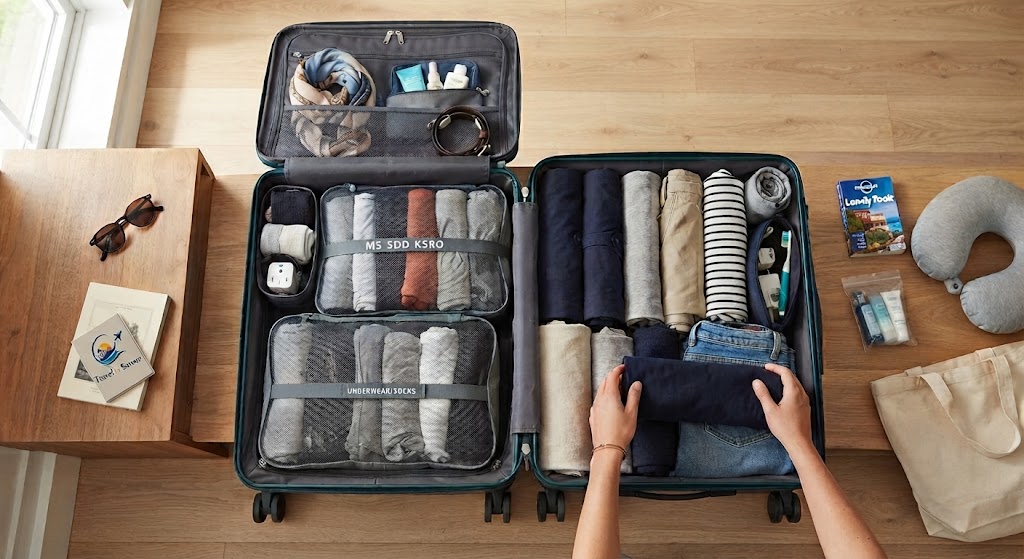
Packing cubes are small fabric containers designed to group clothing and other travel items. They can pack a suitcase much easier to organize. Compression versions can also reduce the volume of soft clothing by pressing air and fabric into a smaller package.
Packing cubes do not magically create more physical space. Their main advantage is that they control how clothing occupies space. Instead of loose shirts spreading across your suitcase, they stay contained inside a defined area. Compression cubes can reduce the volume further.
A simple system is to use one cube for shirts, another for bottoms, another for underwear and socks, and another for sleepwear or gym clothing. For short trips, you can also pack complete outfits together.
Do not overfill the cubes. An extremely full cube may become difficult to fit into the suitcase. It can also create unnecessary wrinkles. Fold or roll clothing neatly before closing the cube.
| Packing Cube | Suggested Contents |
|---|---|
| Large cube | Shirts and lightweight tops |
| Medium cube | Pants, shorts, and dresses |
| Small cube | Underwear and socks |
| Extra cube | Sleepwear or gym clothing |
| Compression cube | Sweaters and bulky clothing |
| Laundry cube | Dirty clothes during the trip |
A separate laundry bag or empty packing cube can be especially useful. You can place worn clothes inside it instead of mixing them with clean clothing. This makes unpacking much easier after you return home.
How to Pack Shoes Without Wasting Space
Shoes can take up a surprising amount of suitcase space. They are also awkwardly shaped, which makes them harder to pack efficiently. The easiest solution is to limit the number of pairs you bring and make every pair useful.
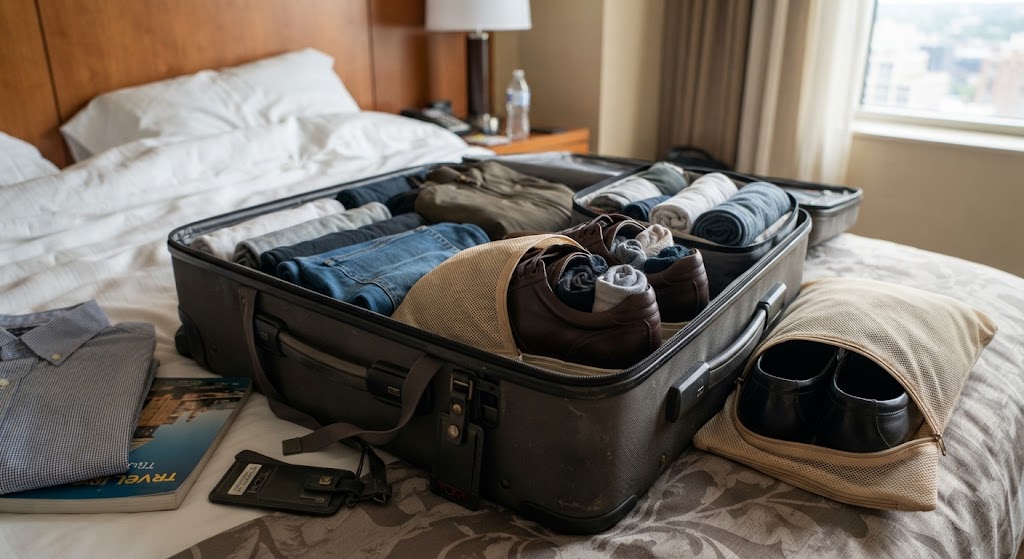
Try wearing your heaviest shoes while traveling. This can free up valuable room inside your luggage. For the shoes you pack, place them along the edges of the suitcase or in gaps between larger items.
Never waste the empty space inside shoes. Socks, underwear, belts, charging cables, and other small items can fit inside sneakers or boots. This uses space that would otherwise remain empty and can also help shoes keep their shape.
Use a shoe bag when possible. Shoe bags prevent dirt from touching clean clothing. If you do not have one, a clean reusable bag can serve the same purpose.
For a normal week-long trip, two or three pairs may be enough for many travelers, depending on the destination and activities. Your most versatile pair should usually be the one you wear during transit.
How to Pack Toiletries, Accessories, and Breakable Items
Toiletries can quickly turn a well-organized suitcase into a messy one. Use small travel-size containers instead of carrying full-size bottles whenever possible. Group toiletries in a waterproof toiletry bag so that leaks are less likely to spread through your luggage.
For U.S. air travel, carry-on liquids, gels, and aerosols generally need to follow the TSA 3-1-1 liquids rule. TSA states that containers must be 3.4 ounces or less, fit in one quart-size clear bag, and each passenger may have one such bag.
Keep the liquids bag somewhere accessible if you are carrying it through security. TSA also recommends keeping large electronics accessible because they may need to be removed during screening, depending on the screening process and lane.
For jewelry, use a small jewelry organizer instead of placing loose pieces into your suitcase. Small pouches can also protect watches, chargers, earbuds, and other accessories.
Breakable items need extra protection. Place them between layers of soft clothing rather than against the hard exterior of the suitcase. You can wrap fragile objects in a T-shirt, sweater, or other soft garment.
The key is to give every small item a home. When everything has a designated place, you spend less time searching through your suitcase.
How to Prevent Clothes From Wrinkling in Your Suitcase
Wrinkles are one of the most common problems with travel packing. No packing technique can guarantee completely wrinkle-free clothing, but you can reduce creases by choosing the right fabrics and avoiding excessive pressure.
Lightweight synthetic fabrics, knits, and some blends often resist wrinkles better than delicate natural fabrics. For dress shirts, dresses, and other wrinkle-prone clothing, fold them carefully and avoid crushing them beneath heavy objects.
Do not pack a suitcase so tightly that you have to force the zipper closed. Excessive compression can create deep creases. A balanced suitcase gives clothing enough structure without turning everything into a compressed block.
One useful method is to place delicate garments near the top of the suitcase. You can also use tissue paper between some layers to reduce friction.
Even professional travelers accept that some wrinkles are unavoidable. Travel experts recommend carrying a compact travel steamer or using a wrinkle-release product when appropriate.
If your hotel has a bathroom with a shower, hanging a suitable garment in the room may also help loosen minor wrinkles through steam. However, keep delicate fabrics away from direct water and excessive heat.
How to Organize Your Suitcase for Easy Access
Good suitcase organization is about more than fitting everything inside. You should also be able to find what you need without removing every item.
Think of your pack a suitcase as a series of zones. Shoes can go around the edges. Heavy clothing can form a stable lower layer. Packing cubes can hold smaller categories. Items needed immediately after arrival can stay near the top.
TSA recommends packing items in layers, such as shoes, clothes, and electronics, and placing accessible items where they can be reached during screening.
For airport travel, keep important documents, medication, electronics, and other essentials easy to access. Do not bury them beneath your entire wardrobe.
A well-organized suitcase should also have some space. If every corner is packed before you leave, there may be no room for purchases, souvenirs, or items you acquire during the trip.
Another useful strategy is outfit planning. Instead of thinking about individual pieces, think about complete outfits. This makes it easier to notice when you are packing too many similar items.
Essential Packing Tools That Make Packing Easier
You do not need dozens of travel gadgets to pack efficiently. A few simple tools can make a major difference. Packing cubes, compression bags, a toiletry organizer, shoe bags, and a portable luggage scale are among the most practical choices.
The right tools should solve a specific packing problem. A compression cube is useful when clothing volume is the issue. A shoe bag is useful when cleanliness is the issue. A luggage scale is useful when weight is the issue.
| Packing Tool | Main Purpose | Most Useful For |
|---|---|---|
| Packing cubes | Organization | Almost every trip |
| Compression cubes | Reduce clothing volume | Bulky clothing |
| Shoe bags | Keep luggage clean | Sneakers and boots |
| Toiletry bag | Contain liquids | Carry-on and checked bags |
| Laundry bag | Separate dirty clothes | Longer trips |
| Luggage scale | Check bag weight | Checked luggage |
| Travel steamer | Reduce wrinkles | Business travel |
A luggage scale is especially useful for checked bags. Pack a suitcase can look manageable but become heavy after adding shoes, toiletries, and souvenirs. Travel experts recommend weighing checked luggage because common airline weight limits can be reached quickly.
Do not buy a tool simply because it is marketed as a packing essential. The best travel packing tools are the ones that solve a real problem for your particular trip.
Common Suitcase Packing Questions Answered
How Do You Pack a Suitcase to Maximize Space?
Start with a packing list. Remove unnecessary items before packing. Then group your clothing by type or outfit. Use a combination of rolling, folding, and packing cubes. Put small items into empty spaces, including suitable spaces inside shoes.
The goal is not to force the maximum possible number of items into your luggage. The goal is to use available space efficiently while keeping the suitcase manageable.
Is It Better to Roll or Fold Clothes in a Suitcase?
Neither method is always better. Rolling can work very well for casual and soft clothing. Folding can work better for structured garments. Many experienced travelers use both methods depending on the item.
How Can I Fit More Clothes in My Suitcase?
The first step is to pack fewer unnecessary clothes. After that, choose versatile pieces, use compact folding or rolling, and consider packing cubes. Compression cubes can be useful for bulky items.
Avoid packing clothes that only work with one outfit. A smaller collection of pieces that can be mixed and matched usually provides more value.
Do Packing Cubes Actually Save Space?
Packing cubes can help you use suitcase space more efficiently by keeping clothing contained. Compression packing cubes can reduce the volume of soft clothing even further. However, cubes should not be treated as a reason to pack unnecessary items.
What Should I Pack First in a Suitcase?
Start with heavier and less delicate items. Shoes can form part of the bottom or edge layer. Then add packed clothing. Smaller items can fill gaps.
Keep fragile, wrinkle-prone, and frequently needed items toward the top.
How Do I Pack a Suitcase Without Wrinkling Clothes?
Choose wrinkle-resistant fabrics when possible. Avoid overpacking. Fold or roll clothing neatly. Keep delicate items near the top and consider a travel steamer for clothing that becomes wrinkled during transit.
How Do I Pack Shoes to Save Space?
Take only the shoes you actually need. Wear the heaviest pair during travel. Place packed shoes around the edges of your suitcase and use their interiors for small items such as socks.
How Can I Make My Suitcase Less Bulky?
Reduce the number of bulky items first. Wear heavy clothing during transit when practical. Use compression cubes for sweaters and similar garments. Select lightweight and versatile clothing whenever possible.
Remember that reducing volume and reducing weight are two different goals. A suitcase can become smaller while still becoming too heavy.
What Is the Best Way to Pack a Carry-On Suitcase?
For a carry-on suitcase, organization and accessibility are especially important. Use compact packing cubes, limit shoes, keep your liquids bag accessible, and place electronics where they can be reached easily.
TSA’s current travel guidance says carry-on liquids must follow the 3-1-1 rule and recommends making certain screening items accessible. Always check current TSA and airline requirements before flying because individual airline policies and security procedures can vary.
How Much Should You Pack for a 7-Day Trip?
There is no single correct amount. Your clothing needs depend on the destination, weather, activities, laundry access, and personal preferences.
For many travelers, a 7-day packing list can be built around a small group of versatile tops, several bottoms, underwear and socks for the trip, sleepwear, one or two layers, and a limited number of shoes. The 5-4-3-2-1 approach can be a useful starting framework rather than a strict rule.
Final Thoughts on How to Pack a Suitcase to Maximize Space
Learning how to pack a suitcase to maximize space is less about finding one magical packing trick and more about creating a repeatable system. Start by planning what you will actually wear. Choose versatile clothing. Remove unnecessary items before they reach your suitcase.
Then use the space intelligently. Roll or fold clothing based on the item. Use packing cubes to control clothing and keep categories organized. Place shoes around the edges and use their empty interiors. Protect toiletries in a dedicated bag and keep airport essentials accessible.
Most importantly, do not confuse a full suitcase with a well-packed suitcase. A good suitcase should be organized, practical, and easy to close. You should be able to find what you need without unpacking everything.
The next time you prepare for a vacation, business trip, or weekend getaway, follow the same basic system. Plan your outfits, reduce unnecessary items, organize your categories, fill empty spaces, and check your luggage weight before leaving.
With practice, efficient suitcase packing becomes much easier. You will spend less time struggling with your luggage and more time enjoying your trip.