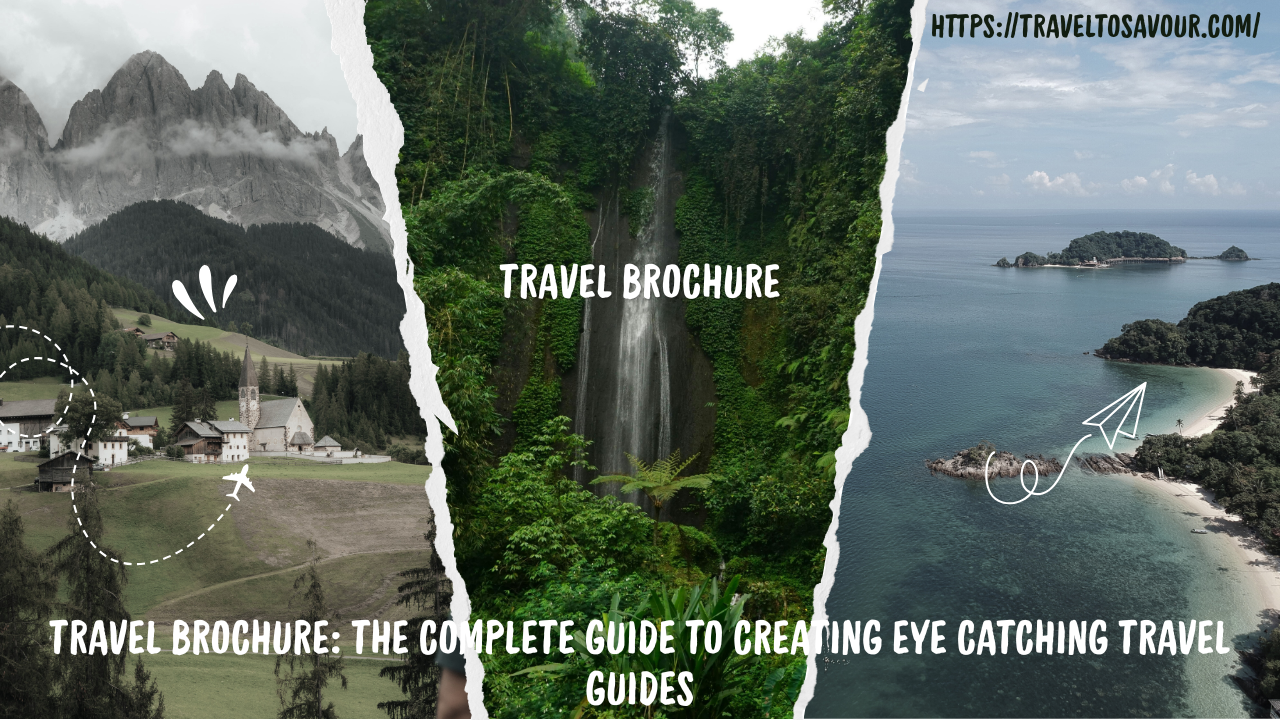
Introduction: Why Your Travel Brochure Is More Powerful Than You Think
Did you know that 79% of travelers say printed brochures still influence their decision about where to go? That number might surprise you in a world full of websites and social media. But the truth is, a well-made travel brochure remains one of the most trusted tools in tourism marketing.
A travel brochure is not just a pretty piece of paper. It is a sales tool, a storytelling device, and a first impression all rolled into one. Whether you are promoting a beach resort, a mountain town, or a city tour, your brochure is often the first thing a potential visitor sees. If it looks cheap or boring, they move on.
This guide will show you exactly how to create a travel brochure that works. You will learn about design, writing, photos, layout, and digital options. By the end, you will have everything you need to build a brochure that turns curious readers into actual visitors.
What Is a Travel Brochure and Why Does It Matter?
A travel brochure is a printed or digital document that promotes a destination, tour, hotel, or travel experience. It gives potential travelers the information they need to make a decision. Good brochures are easy to read, visually appealing, and focused on benefits rather than just facts.
Travel brochures matter because people trust them. A study by the Travel Research Association found that travelers who pick up a destination brochure are more likely to visit that location than those who only see an online ad. The physical nature of a printed brochure creates a sense of reality and trust that a banner ad cannot replicate.
For businesses and tourism boards, brochures are a cost-effective marketing tool. You create them once and distribute them across hotels, airports, visitor centers, and travel agencies. Every person who picks one up is a potential customer with genuine interest in travel.
Know Your Audience Before You Design Anything
The biggest mistake people make when creating a travel brochure is starting with design before thinking about the audience. Before you pick colors or fonts, you need to answer one simple question: Who is this brochure for?
A brochure for families with young children looks very different from one for luxury travelers or adventure seekers. Families want to see photos of safe, fun activities, clear pricing, and practical information. Luxury travelers want elegance, exclusivity, and aspirational images. Adventure travelers want energy, bold visuals, and the promise of something exciting.
Once you know your audience, every decision becomes easier. Your words, images, colors, and layout all work together to speak directly to that specific reader. A brochure that tries to appeal to everyone usually connects with no one.
How to Plan Your Travel Brochure Content
Great travel brochures start with a content plan. You need to decide what information to include and, just as importantly, what to leave out. Too much text overwhelms readers. Too little leaves them without the information they need to take action.
Here is a simple structure that works for most travel brochures:
- Cover: Strong headline, stunning image, your brand or logo
- Introduction: One or two sentences that capture the essence of the destination
- Key attractions: Three to five highlights with brief descriptions
- Practical information: Dates, prices, booking details, contact information
- Call to action: Clear instructions on what to do next
Keep your sentences short. Use active verbs. Write the way you would talk to a friend who asked you about a great place to visit. If your brochure reads like a legal document, people will stop reading.
The Art of Writing Compelling Travel Brochure Copy
Good writing is the backbone of any effective travel brochure. You might have the most beautiful photos in the world, but if your words are flat and boring, your brochure will not convert readers into visitors.
Start with a headline that does real work. Your headline should tell the reader what they are getting and why it matters to them. Weak headlines say things like “Visit Our Beautiful Island.” Strong headlines say things like “Six Days on a Private Island Where Every Meal Is Made Fresh From the Sea.”
Be specific. Specific details create mental images. Instead of saying “enjoy our amazing views,” say “watch the sun set over 200 miles of open ocean from your private balcony.” Specifics build trust. Vague claims feel like empty promises.
Write in the second person. Use the word “you” often. People respond to copy that speaks directly to them. When your brochure says “you will wake up to the sound of waves,” it puts the reader inside the experience immediately.
Choosing the Right Photos for Your Travel Brochure
Photos are the heart of any travel brochure. Research shows that people process images 60,000 times faster than text. Your photos will grab attention, create emotion, and set the tone before a single word is read.
Use high-resolution images only. Low-quality photos make your destination look cheap, even if it is actually stunning. If your photos are blurry, dark, or poorly composed, replace them. There is no excuse for bad photography in a modern brochure.
Show real people enjoying the destination. Photos of empty beaches or deserted streets look lonely and uninviting. When you include people in your images, especially people who look like your target audience, readers can picture themselves in the same situation.
Hire a professional travel photographer if your budget allows it. If not, use reputable stock photo sites like Unsplash or Pexels for free high-quality images, or Shutterstock for premium options. Be careful with stock photos though. If an image looks too generic or staged, readers will sense it.
Brochure Design Basics: Layout, Colors, and Fonts
Design is about more than making something look pretty. Good design guides the reader’s eye, creates a clear flow of information, and reinforces your brand identity. Bad design confuses, distracts, and drives readers away.
Start with a grid-based layout. A grid keeps your content organized and gives your brochure a professional, clean appearance. Most design software like Adobe InDesign, Canva, or Microsoft Publisher includes pre-built grids you can work with.
Choosing Colors
Color is one of the most powerful tools in your design toolkit. Colors carry emotion and meaning. Blue suggests calm and trust, making it popular for beach and ocean destinations. Green evokes nature and freshness, perfect for eco-tourism or hiking brochures. Warm colors like orange and red create energy and excitement, great for adventure or festival-focused brochures.
Stick to two or three main colors. More than that and your brochure starts to look cluttered. Your color scheme should also match your brand colors if you already have them. Consistency across all your marketing materials builds recognition and trust.
Choosing Fonts
Use no more than two fonts in your brochure. One font for headings and one for body text is the standard approach. Choose fonts that are easy to read at both large and small sizes. Decorative or script fonts can work for headings, but never use them for long paragraphs of text.
Understanding Brochure Formats and Sizes
Before you finalize your design, you need to choose the right format. The format of your brochure affects how much information you can include, how it is displayed, and how much it costs to print.
Here are the most common brochure formats used in the travel industry:
| Format | Best For | Description |
|---|---|---|
| Tri-fold | General destination guides | One sheet folded into three panels, creating six sides |
| Bi-fold | Hotel or resort brochures | One sheet folded in half, creating four pages |
| Z-fold | Step-by-step tour itineraries | Creates an accordion-like layout |
| Booklet | Comprehensive destination guides | Multi-page, stapled or bound |
| Rack card | Quick info, easy display | Tall, narrow card that fits in standard display racks |
For most travel businesses, the tri-fold is the most versatile and cost-effective option. It fits in standard display racks at visitor centers and hotels, and it provides enough space for key information without overwhelming the reader.
How to Structure Your Brochure Panel by Panel
If you are using a tri-fold format, you have six panels to work with. Each panel should serve a specific purpose. Random placement of information makes your brochure hard to follow and reduces its effectiveness.
The Cover Panel is the most important. It is what people see first in a display rack. Use your strongest image here along with a compelling headline and your brand name or logo. Keep it clean and uncluttered. The cover’s job is to make someone want to pick up the brochure and open it.
The Inside Left Panel is often used for an introduction or overview of the destination. This is where you set the scene and hook the reader with the essence of what makes this place special. Keep it brief and focused.
The Inside Middle and Right Panels are your main content area. Use these for your key attractions, experiences, or selling points. Include photos alongside each section to keep the visual flow consistent.
The Back Panel should contain practical information: contact details, website, social media handles, booking instructions, and any legal or fine print. The back panel is also a great place for a call to action.
Writing Headlines That Make People Pick Up Your Brochure
Your headlines are the most important text in your entire brochure. Most people scan before they read. If your headlines do not grab them in the first few seconds, they will put the brochure down and move on.
A strong headline has three qualities. First, it is specific. Second, it speaks directly to the reader’s desire or problem. Third, it promises a clear benefit. “Explore the Coast” is a weak headline. “Find 12 Hidden Beaches That Most Tourists Never See” is a strong one.
Use numbers when you can. Headlines with numbers consistently outperform vague ones in marketing tests. Phrases like “5 Reasons,” “7 Days,” or “3 Things You Must Do” give the reader a clear sense of what they are getting.
Avoid using clever puns or wordplay that might confuse readers. Clarity always beats cleverness in brochure writing. The goal is communication, not to impress people with your writing skills.
Including Practical Information Without Boring Your Reader
Travel brochures need to include practical information, but they must not become boring fact sheets. The challenge is to present the essential details in a way that feels useful rather than dry.
Include the basics every traveler needs: location, how to get there, best time to visit, price range, and contact information. If you are promoting tours or packages, include dates, inclusions, and exclusions. Keep this information brief and use formatting like short bullet points to make it easy to scan.
Avoid overloading your brochure with terms and conditions or lengthy disclaimers. Move this type of content to your website and include a short note in the brochure directing readers there for full details. This keeps your brochure clean and readable.
Always include a website address and a phone number. Many travelers still prefer to call before they book. Make your contact information easy to find, ideally in the same spot on every page or panel.
Printing Your Travel Brochure: What to Know
Once your design is finished, you need to get it printed. Printing quality has a massive impact on how professional your brochure looks and feels. A great design printed on thin, flimsy paper loses much of its impact.
Choose a paper weight of at least 100 lb for brochures. This gives them a substantial feel that signals quality to the reader. For the cover of a booklet-style brochure, go heavier, around 130 to 150 lb. Gloss or satin finishes work well for photo-heavy brochures because they make colors pop.
Work with a professional print shop rather than printing at home or using a basic office printer. Print shops like Vistaprint, GotPrint, or local commercial printers can produce high-quality results at reasonable prices. Always request a physical proof before your full print run to catch any color or formatting issues.
How to Create a Digital Travel Brochure
Printed brochures are powerful, but digital versions are essential in the modern marketing mix. A digital travel brochure can be shared via email, posted on your website, or linked from social media. It reaches people anywhere in the world without printing or shipping costs.
The easiest way to create a digital brochure is to export your print design as a high-resolution PDF. Most design tools like Canva, Adobe InDesign, and Microsoft Publisher allow you to do this directly. A well-designed PDF brochure looks just as professional as the printed version on screen.
For a more interactive experience, consider using tools like Flipsnack, Issuu, or Publitas. These platforms convert your PDF into a digital flipbook that readers can scroll through online. They also provide analytics, so you can see how many people open your brochure and which pages they spend the most time on.
Make sure your digital brochure is optimized for mobile devices. More than 60% of web browsing now happens on phones and tablets. If your digital brochure does not display correctly on a small screen, you are losing a huge portion of your potential audience.
Where to Distribute Your Travel Brochure
Creating a great travel brochure is only half the job. Getting it in front of the right people is the other half. Strategic distribution can make the difference between a brochure that works hard for you and one that collects dust in a corner.
For printed brochures, the most effective distribution locations are hotels and motels, airports and train stations, visitor information centers, travel agencies, restaurants in tourist areas, and local attraction sites. Build relationships with the managers of these locations. Many will display your brochures for free or for a small fee.
For digital brochures, distribute them through your email newsletter, your website’s resources or downloads page, travel forums, and social media. You can also send them directly to travel agents and tour operators who might include your destination in their offerings.
Consider reaching out to travel bloggers and influencers who cover your type of destination. Offering them a well-designed digital brochure gives them a professional resource to share with their audience, and it puts your brand in front of thousands of potential visitors.
Common Travel Brochure Mistakes to Avoid
Even experienced marketers make mistakes when creating travel brochures. Knowing what to avoid can save you time, money, and embarrassment.
Too much text is the most common mistake. People do not read brochures word for word. They scan. If your brochure looks like a wall of text, most people will not engage with it at all. Cut your word count by at least 30% after your first draft.
Low-quality photos undermine even the best design. Never use blurry, dark, or poorly lit photos. If the images do not make the destination look appealing, replace them before going to print.
No clear call to action leaves readers wondering what to do next. Every brochure needs a clear next step. Whether it is calling a number, visiting a website, or scanning a QR code, tell the reader exactly what action to take.
Outdated information can seriously damage your credibility. Always update your brochures when prices, hours, contact information, or available tours change. Printing a new run of brochures costs money, but misleading potential customers costs more.
Using QR Codes to Bridge Print and Digital
QR codes are small, scannable squares that link directly to a website or digital resource. Adding a QR code to your printed travel brochure connects the physical and digital experience in a simple and effective way.
A reader can scan your QR code with their phone and instantly be taken to your booking page, a video tour of the destination, or a downloadable map. This makes your printed brochure interactive and extends its usefulness beyond what is physically printed on the page.
Creating a QR code is free and easy using tools like QR Code Generator or QR Tiger. Generate a code that links to a specific landing page rather than your general homepage. This way, you can track how many people scan the code and measure your brochure’s effectiveness.
Place the QR code on the back panel of your brochure near your call to action. Add a short line of text next to it that tells readers what they will get when they scan it, such as “Scan to watch our 60-second destination video.”
How to Measure the Success of Your Travel Brochure
Many businesses print brochures and then have no idea whether they are actually working. Measuring your brochure’s effectiveness helps you improve future versions and justify your marketing spend.
For printed brochures, use a unique phone number or a dedicated landing page URL that appears only in the brochure. When calls come in on that number or visitors land on that specific page, you know they came from the brochure. This gives you a clear picture of how much traffic your brochure is generating.
For digital brochures, tracking is much easier. PDF analytics tools, platforms like Issuu, and Google Analytics can all show you how many people opened the brochure, how long they spent with it, and what they did afterward. Review these numbers monthly and look for patterns.
Ask your customers directly. When someone books a tour or visit, simply ask how they found out about you. If multiple people say “from your brochure,” that is solid evidence it is working. This simple approach costs nothing and provides valuable insight.
Refreshing and Updating Your Travel Brochure Over Time
A travel brochure is not a one-and-done project. Destinations change, prices change, and what appeals to travelers evolves over time. Plan to review and update your brochure at least once a year.
When you update your brochure, look at everything: photos, copy, pricing, contact information, and design. If your brochure looks dated, a visual refresh can significantly improve its performance. Design trends shift over time, and a brochure that looked modern five years ago might look tired today.
Pay attention to feedback from readers and customers. If people consistently ask questions that your brochure should answer but does not, add that information in the next version. Your brochure should evolve based on what your audience actually needs.
Keep your digital brochure version always up to date. Unlike printed copies, digital versions can be updated at any time without cost. Replace the PDF on your website every time significant changes occur so that readers always get current and accurate information.
Budget Planning for Your Travel Brochure
Creating a professional travel brochure does not have to break the bank. With the right planning, you can produce a high-quality result at almost any budget level.
If you are working with a tight budget, use free tools like Canva to design your brochure. Canva has hundreds of travel brochure templates that are easy to customize. Use free stock photos from Unsplash or Pexels. Print a small initial run of 500 to 1,000 copies to test distribution before committing to a larger print run.
If you have a larger budget, invest in a professional graphic designer and a professional photographer. The difference in quality is noticeable, and the return on investment can be significant. A well-designed brochure that generates bookings more than pays for itself.
For most small tourism businesses, a realistic budget for a basic tri-fold brochure including design, printing of 1,000 copies, and photography ranges from $500 to $2,000. Larger booklet-style brochures or those with premium photography will cost more. Get three quotes from different print suppliers before committing.
Internal Link Suggestion: Link here to an article on “How to Build a Travel Marketing Budget That Works.”
Conclusion: Your Travel Brochure Can Be Your Best Marketing Tool
A great travel brochure does more than look beautiful. It communicates value, builds trust, and motivates people to take action. When it is done well, it works around the clock at hotel lobbies, visitor centers, and inboxes across the world, bringing new customers to your door.
The key takeaways from this guide are simple. Know your audience. Plan your content before you design. Use strong headlines and specific copy. Choose high-quality photos. Pick the right format. Distribute strategically. Measure results. And update regularly.
You now have everything you need to create a travel brochure that genuinely works. Start with a clear goal, follow the steps in this guide, and be willing to improve based on real feedback and real data.
Ready to get started? Open Canva, pick a template, and build the first draft of your travel brochure today. If you want professional help, reach out to a local graphic designer or a travel marketing agency. The sooner you have a great brochure in circulation, the sooner it starts working for you.